Tonsillitis
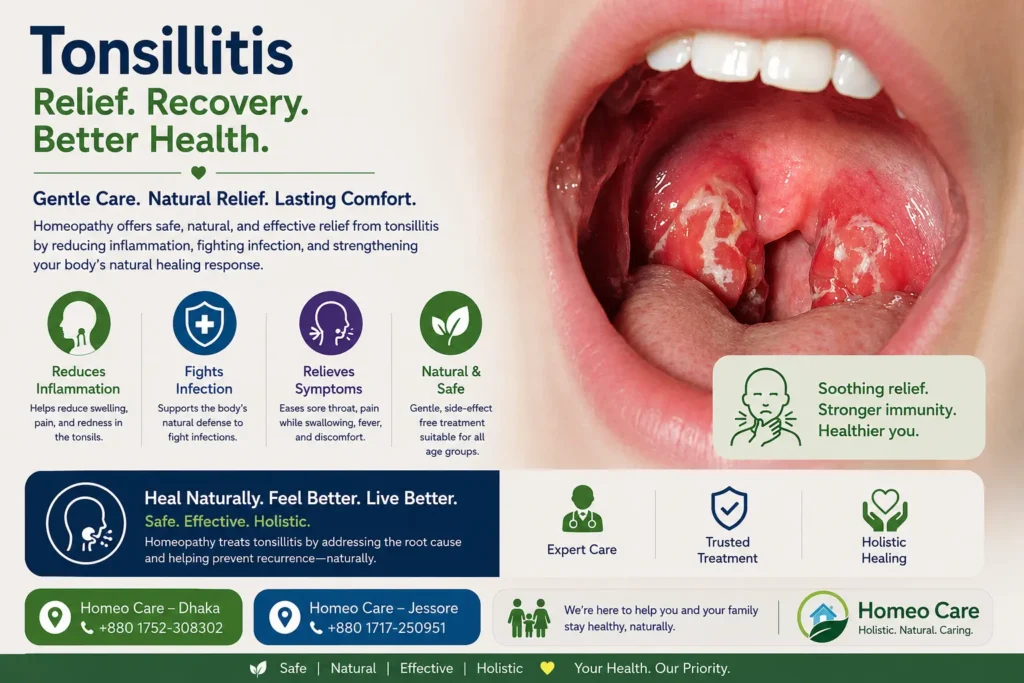
Tonsillitis means inflammation of the tonsils, usually causing sore throat, painful swallowing, fever, swollen glands, and red or enlarged tonsils. Most acute sore throats, including many cases of tonsillitis, are viral and improve within about one week without antibiotics; however, some cases are bacterial and need proper diagnosis and treatment. (NICE)
From a homeopathic clinical perspective, tonsillitis is not assessed only by the name of the disease. A trained homeopathic physician looks at the complete symptom picture: onset, triggers, fever pattern, thirst, pain character, side preference, emotional state, recurrence pattern, sleep, appetite, digestion, allergies, nutrition, and the patient’s general susceptibility. This patient-centered approach should be used responsibly and should never delay urgent medical care when warning signs are present.
Dr. Md. Hasanuzzaman’s clinical work as a homeopathic physician, clinical nutritionist, and medical educator emphasizes individualized assessment, rational patient education, and safe integration of supportive care. For acute and recurrent tonsil inflammation, the goal is not to promise a “quick cure,” but to understand why a patient is prone to repeated throat inflammation and to guide care safely.
Quick Answer
Tonsillitis is inflammation of the tonsils, commonly caused by viral infections and sometimes by group A Streptococcus bacteria. Viral tonsillitis usually improves with rest, fluids, pain control, and supportive care, while confirmed bacterial strep throat requires appropriate antibiotics to reduce symptoms, transmission, and complications. (NICE)
Homeopathic care for tonsillitis is individualized. It considers the person’s total symptom pattern rather than using one fixed remedy for everyone. Current scientific evidence for homeopathic medicines in acute respiratory infections is limited and inconsistent, so homeopathy should be presented as supportive individualized care, not a guaranteed replacement for evidence-based medical treatment. (Cochrane)
Key Facts Summary
| Key Point | Patient-Friendly Explanation |
|---|---|
| What it is | Tonsillitis is inflammation of the tonsils, usually causing sore throat and painful swallowing. |
| Common causes | Viruses are the most common cause of sore throat; group A strep is an important bacterial cause. (CDC) |
| Antibiotics | Antibiotics are not needed for viral tonsillitis but are needed when strep throat is confirmed or strongly suspected in high-risk cases. (CDC) |
| Usual recovery | Many acute sore throats improve in around one week with supportive care. (NICE) |
| Recurrent tonsillitis | Repeated episodes require documentation, assessment of triggers, immune and nutritional factors, and sometimes ENT evaluation. |
| Homeopathic approach | Remedy selection is individualized according to the totality of symptoms, constitution, modalities, recurrence pattern, and general health. |
| Safety | Severe symptoms such as breathing difficulty, drooling, dehydration, neck swelling, or suspected abscess need urgent medical care. |
| Prevention | Hand hygiene, respiratory etiquette, adequate sleep, hydration, nutrition, and avoiding unnecessary antibiotics are important. (CDC) |
Table of Contents
- What Is Tonsillitis?
- Types of Tonsillitis
- Symptoms of Tonsillitis
- Viral vs Bacterial Tonsillitis
- Causes and Risk Factors
- When Tonsillitis Is Serious
- Diagnosis and Medical Evaluation
- Conventional Treatment Overview
- Individualized Homeopathic Perspective
- Homeopathic Case-Taking for Tonsillitis
- Recurrent Tonsillitis: Why It Keeps Coming Back
- Nutrition and Lifestyle Support
- Practical Home Care Tips
- Common Mistakes to Avoid
- Prevention Strategy
- Tonsillectomy: When Surgery Is Discussed
- FAQs
- Key Takeaways
- Conclusion
- References
- Medical Disclaimer
- Internal Linking Suggestions
- Recommended Schema
- Call-to-Action
- About the Doctor
What Is Tonsillitis?
Tonsillitis is inflammation of the tonsils, the two oval lymphoid tissues at the back of the throat. The tonsils are part of the immune system and help recognize germs entering through the mouth and nose, but they can become inflamed during infections. Tonsillitis may be acute, recurrent, or chronic depending on duration and frequency.
The most common symptoms are sore throat, pain while swallowing, fever, swollen neck glands, red tonsils, and sometimes white or yellow patches on the tonsils. In children, tonsillitis may also appear with reduced appetite, irritability, abdominal pain, headache, nausea, or vomiting, especially when group A strep is involved. (CDC)
In simple words, tonsillitis is not just “tonsil swelling.” It is a throat inflammation pattern that may reflect infection, immune response, environmental exposure, allergy tendency, digestive irritation, poor sleep, or repeated exposure in school or family settings.
Types of Tonsillitis
Tonsillitis is usually grouped by how suddenly it starts, how long it lasts, and how often it returns. Understanding the type helps guide safe treatment and long-term prevention.
Acute Tonsillitis
Acute tonsillitis starts suddenly and usually lasts a few days to about one week. It often comes with sore throat, fever, painful swallowing, and tiredness. NICE guidance notes that acute sore throat, including tonsillitis, is often self-limiting and commonly triggered by viral upper respiratory infection. (NICE)
Recurrent Tonsillitis
Recurrent tonsillitis means repeated attacks of tonsil inflammation over months or years. This pattern is especially common in children, students, and people with frequent exposure to respiratory infections. In recurrent cases, proper documentation is important: dates, fever, throat appearance, test results, antibiotics used, school or work absence, and recovery pattern.
Chronic Tonsillitis
Chronic tonsillitis refers to long-lasting low-grade tonsil inflammation. Symptoms may include persistent throat discomfort, bad breath, enlarged tonsils, tonsil stones, repeated mild soreness, and a feeling of something stuck in the throat. Chronic cases need careful evaluation because similar symptoms may also come from allergy, postnasal drip, acid reflux, dental infection, smoking exposure, or chronic sinus problems.
Symptoms of Tonsillitis
Tonsillitis commonly causes sore throat, fever, painful swallowing, swollen glands, and red or enlarged tonsils. Some people have white spots or pus-like exudate, but this alone does not always prove a bacterial infection. Clinical context and testing matter.
Common symptoms include:
| Symptom | What It May Mean |
|---|---|
| Sudden sore throat | Can occur in viral or strep infection |
| Fever | More suggestive of infection, especially if high |
| Painful swallowing | Common in acute tonsillitis |
| Swollen neck glands | Often seen in strep and other infections |
| Cough, runny nose, hoarseness | More suggestive of viral infection |
| White patches on tonsils | Can occur in strep, viral infections, or glandular fever |
| Bad breath | May occur in tonsil stones, chronic tonsillitis, or bacterial overgrowth |
| Snoring or mouth breathing | May suggest enlarged tonsils affecting airway during sleep |
The CDC notes that group A strep pharyngitis commonly presents with fever, pain with swallowing, sudden sore throat, anterior cervical lymph node swelling, tonsillar redness, tonsillar enlargement, and sometimes exudate. Viral symptoms such as cough, runny nose, hoarseness, oral ulcers, or conjunctivitis make strep less likely. (CDC)
Viral vs Bacterial Tonsillitis
Viral tonsillitis is more common, while bacterial tonsillitis—especially group A strep—requires careful diagnosis because complications can occur if it is untreated. Symptoms overlap, so appearance alone is not always enough to decide. Testing may be needed when viral symptoms are absent or strep is suspected. (CDC)
Signs More Suggestive of Viral Tonsillitis
Viral tonsillitis often appears with cough, runny nose, sneezing, hoarseness, watery eyes, mouth ulcers, mild fever, or general cold symptoms. Antibiotics do not work against viruses, and using antibiotics unnecessarily contributes to antimicrobial resistance.
Signs More Suggestive of Strep Throat
Strep throat is more likely when sore throat begins suddenly with fever, painful swallowing, swollen tender neck glands, tonsillar redness or exudate, and no cough. The CDC estimates that group A strep causes about 20% to 30% of pharyngitis episodes in children and about 5% to 15% in adults. (CDC)
Why Correct Diagnosis Matters
Correct diagnosis protects patients from both undertreatment and overtreatment. Untreated bacterial strep can rarely lead to complications such as peritonsillar abscess, acute rheumatic fever, or post-streptococcal kidney inflammation, while unnecessary antibiotics can cause side effects and contribute to resistance. (CDC)
Causes and Risk Factors
Tonsillitis is usually caused by infection, but recurrence often reflects a wider pattern of susceptibility. A person’s exposure, immunity, sleep, nutrition, allergy tendency, hygiene habits, and family environment can all influence repeated episodes.
Important risk factors include:
| Risk Factor | How It Contributes |
|---|---|
| School or daycare exposure | Children are exposed to frequent respiratory infections |
| Close family transmission | Infections may spread among household members |
| Poor sleep | May weaken immune resilience |
| Mouth breathing | Dries the throat and irritates tonsils |
| Allergic rhinitis | Postnasal drip may irritate the throat |
| Acid reflux | Can cause chronic throat irritation |
| Poor hydration | Thick mucus and dry throat worsen discomfort |
| Nutritional deficiency | Low intake of protein or micronutrients may affect immune function |
| Smoke or pollution exposure | Irritates throat lining |
| Repeated unnecessary antibiotics | May disturb microbiome balance and contribute to resistance |
From a homeopathic point of view, these risk factors are not ignored. They are part of the “maintaining causes”—the ongoing influences that may keep a patient vulnerable. A responsible physician must identify and address these factors rather than only prescribing for the acute throat pain.
When Tonsillitis Is Serious
Most tonsillitis improves with supportive care, but some symptoms require urgent medical evaluation. A patient should not wait for home care or homeopathic assessment if there are signs of airway risk, dehydration, severe infection, or abscess.
Seek urgent medical care if any of the following occur:
| Red Flag | Why It Matters |
|---|---|
| Difficulty breathing | Possible airway compromise |
| Drooling or inability to swallow saliva | May indicate severe swelling or abscess |
| Severe one-sided throat pain | Could suggest peritonsillar abscess |
| Muffled “hot potato” voice | Possible abscess or severe swelling |
| Neck swelling or stiffness | May suggest deeper infection |
| Dehydration, very low urine, lethargy | Needs medical assessment |
| Persistent high fever | May need testing and treatment |
| Rash with sore throat | Could be scarlet fever or another infection |
| Symptoms worsening rapidly | Needs reassessment |
| Symptoms not improving after one week | Needs medical review |
NICE recommends reassessment if symptoms worsen rapidly or significantly, if symptoms suggest a more serious illness, or if the person becomes systemically very unwell. Hospital referral is recommended for severe systemic infection or severe suppurative complications such as quinsy or deep neck infection. (NICE)
Diagnosis and Medical Evaluation
Diagnosis begins with history and examination, but testing is important when bacterial strep is suspected and viral signs are absent. Clinicians may use clinical scoring tools, rapid antigen tests, or throat culture depending on age, severity, and local practice. (CDC)
A proper evaluation may include:
Medical History
The physician asks about onset, fever, swallowing pain, cough, runny nose, exposure to sick contacts, previous episodes, antibiotics used, allergies, sleep, snoring, appetite, hydration, and school or work absence.
Throat Examination
The doctor checks tonsil size, redness, exudate, uvula position, palate spots, neck glands, hydration, breathing, and signs of abscess.
Strep Testing
The CDC states that when clear viral symptoms are present, clinical examination can diagnose viral pharyngitis and strep testing is not needed. When viral symptoms are absent, clinical examination alone cannot reliably distinguish viral from group A strep pharyngitis, and rapid antigen detection test or throat culture may be used. (CDC)
Documentation for Recurrent Cases
For recurrent tonsillitis, every episode should be documented with date, fever, tonsil findings, test results if done, treatment used, and recovery. This is especially important if ENT referral or tonsillectomy discussion becomes necessary.
Conventional Treatment Overview
Conventional treatment depends on whether tonsillitis is likely viral, confirmed bacterial, severe, or recurrent. The safest approach is not “antibiotics for everyone” and not “avoid antibiotics always.” The correct approach is appropriate diagnosis and individualized risk assessment.
Supportive Care
For many acute sore throats, supportive care is enough. NICE recommends advice about the usual course, pain and fever management, hydration, and reassessment if symptoms worsen or fail to improve. Paracetamol or ibuprofen may be considered when suitable, and adults may try certain medicated lozenges, although pain reduction may be small. (NICE)
Antibiotics
Antibiotics are needed for confirmed group A strep throat and for some high-risk cases. The CDC states that patients with positive rapid antigen test or throat culture need antibiotics and that viral pharyngitis should not be treated with antibiotics. Recommended antibiotic treatment for group A strep can shorten symptoms, reduce transmission, and decrease complications. (CDC)
Antibiotic Stewardship
Responsible antibiotic use is important because antimicrobial resistance is a global health threat. WHO explains that antimicrobial resistance occurs when microorganisms no longer respond to antimicrobial medicines, making infections harder or sometimes impossible to treat; misuse and overuse of antimicrobials accelerate this problem. (World Health Organization)
Individualized Homeopathic Perspective
Homeopathic care for tonsillitis focuses on the individual patient, not only the inflamed tonsil. Two patients may both have red swollen tonsils, but one may have sudden burning heat, great thirst, and restlessness, while another may have slow recurrent swelling, chilliness, bad breath, and weakness. In homeopathic philosophy, these differences matter.
NCCIH describes homeopathy as a system based on “like cures like” and the “law of minimum dose,” and notes that homeopathic treatments are individualized, meaning different people with the same condition may receive different treatments. At the same time, NCCIH also states that there is little evidence to support homeopathy as an effective treatment for any specific health condition. (NCCIH)
Therefore, a responsible homeopathic article must be honest: homeopathy may be used as individualized supportive care by qualified practitioners, but it should not be presented as a guaranteed cure for tonsillitis and should not replace antibiotics when strep throat is confirmed or urgent care is needed.
The Homeopathic Aim in Tonsillitis
The clinical aim is to understand the patient’s pattern of susceptibility. A homeopathic physician may ask:
- Why does this person develop throat inflammation repeatedly?
- Is the pattern linked with cold drinks, weather change, damp exposure, school stress, poor sleep, allergies, reflux, or nutritional weakness?
- Does the illness start suddenly or gradually?
- Is the pain worse on the right side, left side, or alternating?
- Is the patient thirsty or thirstless?
- Is the fever dry, sweaty, chilly, or restless?
- Does the patient become irritable, clingy, anxious, dull, or oversensitive during illness?
This style of case-taking reflects the author’s broader clinical interests in pediatrics, child development, allergy, asthma, eczema, digestive disorders, lifestyle medicine, clinical nutrition, and mental health.
Homeopathic Case-Taking for Tonsillitis
Homeopathic case-taking is detailed because the remedy is selected according to the total symptom picture. The disease name “tonsillitis” is only the starting point. The patient’s characteristic features guide the clinical decision.
Acute Case-Taking
In acute tonsillitis, the physician studies the present episode carefully:
| Case Detail | Why It Matters in Homeopathy |
|---|---|
| Onset | Sudden onset vs gradual onset |
| Trigger | Cold wind, cold drink, rain, damp weather, exhaustion, stress |
| Fever pattern | Dry heat, chills, sweat, periodic fever |
| Thirst | Thirsty, thirstless, small sips, large quantities |
| Pain type | Burning, stitching, splinter-like, raw, swollen, radiating to ear |
| Side | Right, left, alternating, one-sided |
| Modalities | Better from warm drinks, cold drinks, rest, open air, swallowing |
| Tongue and breath | Coating, dryness, bad breath |
| Mental state | Irritable, restless, fearful, clingy, dull, sensitive |
| Associated symptoms | Cough, coryza, stomach upset, rash, headache |
Constitutional or Recurrent Case-Taking
For recurrent tonsillitis, the assessment becomes broader. The physician evaluates appetite, digestion, stool pattern, sweating, sleep, growth, school stress, emotional sensitivity, allergy tendency, family history, skin conditions, and previous antibiotic use. This is where a homeopathic physician with training in physiology and nutrition can contribute patient education beyond acute symptom relief.
Educational Examples of Homeopathic Remedy Patterns
The following examples are for educational understanding only. They are not prescriptions and should not be used for self-medication, especially in children, pregnancy, severe infection, or recurrent disease.
| Possible Homeopathic Pattern | Typical Clinical Picture Considered by Practitioners |
|---|---|
| Belladonna-like picture | Sudden high fever, red throat, heat, throbbing pain, flushed face, sensitivity |
| Mercurius-like picture | Swollen tonsils, bad breath, salivation, coated tongue, sweating, worse at night |
| Hepar sulph-like picture | Extreme sensitivity to cold, splinter-like throat pain, tendency toward suppuration |
| Phytolacca-like picture | Dark red throat, pain radiating to ears, worse swallowing, aching body |
| Apis-like picture | Puffy swelling, stinging pain, less thirst, worse heat |
| Baryta carb-like constitutional picture | Recurrent tonsil enlargement in children with delayed development or shyness pattern |
| Calcarea carb-like constitutional picture | Recurrent infections with sweating, chilliness, slow stamina, nutritional concerns |
A qualified physician does not prescribe based on one symptom only. For example, “white patches” alone do not automatically mean one remedy. The full pattern, medical diagnosis, severity, and safety risks must be considered.
Evidence-Based View of Homeopathy in Tonsillitis
Scientific evidence for homeopathy in acute respiratory infections remains limited and mixed, and there is no strong evidence that homeopathic medicines reliably cure tonsillitis. A 2022 Cochrane review on oral homeopathic medicines for preventing and treating acute respiratory tract infections in children found no consistent benefit compared with placebo for recurrence or cure rates, and the certainty of evidence was low to very low for most outcomes. (Cochrane)
This does not mean that individualized homeopathic consultations have no value for patient education, lifestyle review, careful observation, and whole-person care. It does mean that claims must be modest, honest, and clinically responsible. Homeopathic care should be positioned as individualized supportive care and not as a substitute for urgent medical treatment, diagnostic testing, antibiotics when indicated, or ENT evaluation when needed.
Safety also matters. The FDA states that no homeopathic product is FDA-approved in the United States and warns that some products may contain measurable active ingredients, contamination, incorrect dilutions, or may delay effective treatment if used in place of evidence-based care. (U.S. Food and Drug Administration)
Recurrent Tonsillitis: Why It Keeps Coming Back
Recurrent tonsillitis may happen because of repeated exposure, incomplete recovery, bacterial carriage, allergies, poor sleep, mouth breathing, reflux, immune vulnerability, or environmental irritation. The correct approach is to document episodes and identify modifiable causes.
Possible Reasons for Recurrence
| Cause | What to Check |
|---|---|
| Repeated school exposure | Classmates, siblings, daycare, shared bottles |
| Strep carrier state | Repeated positive tests without typical illness |
| Allergic rhinitis | Sneezing, blocked nose, postnasal drip |
| Mouth breathing | Snoring, dry mouth, enlarged adenoids |
| Acid reflux | Sour taste, morning throat pain, cough after meals |
| Poor nutrition | Low protein, low fruit/vegetable intake, picky eating |
| Sleep debt | Late nights, screen use, poor recovery |
| Environmental irritants | Smoke, dust, pollution, damp room |
| Family transmission | Repeated sore throat in household members |
For a homeopathic physician, recurrence is a signal to study the constitution and maintaining causes. The goal is to reduce susceptibility through individualized treatment, nutrition correction, sleep improvement, hygiene education, and appropriate medical referral when needed.
Nutrition and Lifestyle Support
Nutrition does not “cure” tonsillitis instantly, but good nutrition supports immune function, tissue repair, and recovery. During acute tonsillitis, the patient needs hydration, soft foods, adequate calories, and gentle nourishment. For recurrent cases, long-term nutrition matters more.
WHO healthy diet guidance emphasizes dietary variety, including vegetables, fruits, legumes, nuts, and whole grains, and recommends at least 400 g of fruits and vegetables daily for general health. (World Health Organization)
During Acute Tonsillitis
Helpful options include:
- Warm water or lukewarm fluids
- Soft rice, soup, khichuri, porridge, oats, or soft vegetables
- Honey in warm water for adults and children over one year
- Yogurt if tolerated
- Mashed banana, soft fruit, or smoothies
- Avoiding spicy, fried, acidic, very hard, or scratchy foods
For Recurrent Tonsillitis
Long-term support may include:
| Nutritional Focus | Practical Food Sources |
|---|---|
| Protein | Fish, egg, lentils, chicken, milk, yogurt, beans |
| Vitamin C foods | Guava, lemon, orange, amla, capsicum, leafy greens |
| Zinc foods | Fish, meat, egg, lentils, pumpkin seeds |
| Vitamin D | Safe sunlight exposure, egg yolk, fish; testing if deficiency suspected |
| Gut support | Fiber-rich foods, yogurt, fermented foods if tolerated |
| Hydration | Regular water intake, especially during fever |
Vitamin D has been studied in recurrent tonsillitis, but findings are not fully consistent. Some studies suggest an association between low vitamin D and recurrent tonsillitis, while others have not found a significant difference; therefore, testing and supplementation should be individualized rather than automatic. (PMC)
Practical Home Care Tips
Most mild cases need comfort, hydration, and careful observation. Home care should reduce discomfort while watching for red flags.
Practical steps:
- Encourage frequent small sips of water.
- Use warm saline gargle for older children and adults who can gargle safely.
- Offer soft, non-spicy foods.
- Keep the room comfortably humid if air is dry.
- Avoid smoke, dust, and strong perfumes.
- Rest the voice if speaking worsens pain.
- Monitor fever, urine output, breathing, swallowing, and alertness.
- Do not share cups, spoons, towels, or toothbrushes.
- Replace or rinse oral hygiene items after recovery, especially after confirmed strep.
- Seek medical assessment if symptoms worsen or do not improve as expected.
NICE supports adequate fluid intake and appropriate pain or fever management for acute sore throat, with reassessment when symptoms worsen or the patient becomes systemically unwell. (NICE)
Common Mistakes to Avoid
Many tonsillitis problems become worse because of delayed assessment, unnecessary antibiotics, incomplete antibiotic courses, or unsafe self-medication. A balanced approach avoids both panic and neglect.
Mistake 1: Assuming Every Tonsillitis Needs Antibiotics
Most sore throats are viral, and antibiotics do not treat viruses. Unnecessary antibiotic use can cause side effects and contributes to antimicrobial resistance. (World Health Organization)
Mistake 2: Avoiding Medical Care When Strep Is Likely
If strep throat is confirmed, antibiotics are important. CDC guidance states that patients with a positive rapid antigen test or throat culture need antibiotics, and treatment reduces symptoms, transmission, and complications. (CDC)
Mistake 3: Using Homeopathy as a Replacement in Severe Infection
Homeopathy should not delay urgent care for breathing difficulty, dehydration, abscess signs, severe systemic illness, or confirmed bacterial infection. Responsible homeopathic care respects medical diagnosis and referral.
Mistake 4: Ignoring Recurrent Patterns
Repeated tonsillitis should be documented and assessed. Families should record dates, fever, test results, antibiotics, missed school, snoring, mouth breathing, and triggers.
Mistake 5: Focusing Only on the Tonsils
Recurrent throat inflammation may be connected with allergy, reflux, poor sleep, nutritional weakness, environmental irritation, or family transmission. A whole-person approach is more useful than repeatedly treating only the visible throat.
Prevention Strategy
Prevention means reducing infection exposure, strengthening general health, and correcting maintaining causes. No method can prevent every sore throat, but consistent habits reduce risk and improve recovery.
Important prevention steps:
| Prevention Area | What to Do |
|---|---|
| Hygiene | Wash hands, cover coughs, avoid sharing utensils |
| School habits | Use own water bottle, avoid close contact with sick classmates |
| Sleep | Maintain regular sleep schedule |
| Nutrition | Ensure protein, fruits, vegetables, and hydration |
| Allergy control | Treat nasal blockage and postnasal drip |
| Reflux care | Avoid late heavy meals, excessive spicy food, and lying down after meals |
| Environment | Reduce smoke, dust, dampness, and strong fragrances |
| Follow-up | Review recurrent cases with a qualified physician |
| Antibiotic responsibility | Use antibiotics only when medically indicated |
CDC notes that good hand hygiene and respiratory etiquette can reduce the spread of group A strep bacteria. People with group A strep should stay home from school, daycare, or work until they are afebrile and have received appropriate antibiotics for at least 12–24 hours. (CDC)
Tonsillectomy: When Surgery Is Discussed
Tonsillectomy is not the first choice for most children with sore throat, but it may be discussed in carefully selected recurrent or obstructive cases. Decisions should be based on documented frequency, severity, complications, sleep-disordered breathing, and shared decision-making.
The American Academy of Otolaryngology–Head and Neck Surgery guideline recommends watchful waiting when recurrent throat infections are fewer than 7 episodes in the past year, fewer than 5 episodes per year for 2 years, or fewer than 3 episodes per year for 3 years. Tonsillectomy may be considered when episodes meet higher frequency thresholds and are documented with fever, cervical adenopathy, tonsillar exudate, or positive group A strep testing. (Sage Journals)
The same guideline emphasizes that tonsillectomy benefits for recurrent infection are generally modest and must be weighed against surgical risks such as pain, dehydration, bleeding, anesthesia complications, and missed activity. (Sage Journals)
A homeopathic physician should not discourage ENT evaluation when criteria are met or when sleep-disordered breathing is present. Instead, the role is to support careful documentation, strengthen general health, address modifiable causes, and help the family make an informed decision.
Frequently Asked Questions
1. What is the main cause of tonsillitis?
The main cause of tonsillitis is infection, most often viral and sometimes bacterial. Group A strep is the most important bacterial cause because it may need antibiotics and can rarely lead to complications if untreated. (CDC)
2. How do I know if tonsillitis is viral or bacterial?
Viral tonsillitis often comes with cough, runny nose, hoarseness, or mouth ulcers. Strep throat is more likely with sudden sore throat, fever, painful swallowing, swollen tender neck glands, and no cough, but testing is often needed when viral symptoms are absent. (CDC)
3. Does every tonsillitis need antibiotics?
No. Many cases are viral and improve without antibiotics. Antibiotics are needed when group A strep is confirmed or when a clinician decides the patient is high-risk or severely unwell. (NICE)
4. Can homeopathy treat tonsillitis?
Homeopathy approaches tonsillitis through individualized case-taking and remedy selection based on the total symptom picture. However, current scientific evidence does not prove that homeopathic medicines reliably cure tonsillitis, so it should be used responsibly as supportive individualized care and not as a replacement for urgent treatment or antibiotics when needed. (Cochrane)
5. Is homeopathy safe for children with tonsillitis?
Highly diluted homeopathic remedies are often considered low-risk, but product quality and inappropriate use are safety concerns. Children with high fever, dehydration, breathing difficulty, suspected strep, or recurrent severe episodes should be assessed by a qualified physician. (U.S. Food and Drug Administration)
6. What are the danger signs of tonsillitis?
Danger signs include breathing difficulty, drooling, inability to swallow, dehydration, severe one-sided throat pain, muffled voice, neck swelling, stiff neck, rash, persistent high fever, or rapid worsening. These require urgent medical evaluation.
7. Why does my child get tonsillitis again and again?
Repeated tonsillitis may be due to frequent exposure, allergy, mouth breathing, enlarged adenoids, reflux, poor sleep, nutritional issues, family transmission, or immune susceptibility. A detailed history and episode diary help identify the pattern.
8. Can tonsillitis affect sleep?
Yes. Enlarged tonsils can contribute to snoring, mouth breathing, restless sleep, and sometimes obstructive sleep-disordered breathing. Children with snoring, pauses in breathing, poor growth, daytime tiredness, or behavioral issues should be medically assessed.
9. What foods are good during tonsillitis?
Soft, soothing foods are best: soup, porridge, khichuri, soft rice, yogurt if tolerated, mashed banana, warm fluids, and adequate water. Avoid spicy, fried, acidic, hard, or scratchy foods during acute pain.
10. Can cold drinks cause tonsillitis?
Cold drinks do not directly cause infection, but in some sensitive individuals they may trigger throat discomfort or aggravate symptoms. Homeopathic case-taking considers whether cold drinks consistently trigger episodes in that particular person.
11. What is the best homeopathic medicine for tonsillitis?
There is no single “best” homeopathic medicine for all tonsillitis cases. Remedy selection depends on the person’s total symptom pattern, including onset, pain type, fever, thirst, side, triggers, modalities, and general constitution.
12. When should tonsils be removed?
Tonsillectomy may be discussed when recurrent infections meet specific documented frequency and severity criteria, or when enlarged tonsils cause obstructive sleep apnea or significant breathing problems. Watchful waiting is recommended when episodes are below guideline thresholds. (Sage Journals)
13. Can tonsillitis spread to others?
Yes. Viral and bacterial throat infections can spread through respiratory droplets, close contact, and shared utensils. Hand hygiene, cough etiquette, and avoiding sharing bottles or spoons help reduce transmission. (CDC)
14. Can adults get recurrent tonsillitis?
Yes. Adults can have recurrent tonsillitis, especially with frequent exposure, smoking, reflux, allergies, stress, poor sleep, or untreated nasal problems. Adult recurrent sore throat should be assessed carefully to rule out other causes.
15. How can I prevent recurrent tonsillitis naturally?
Natural prevention focuses on sleep, hydration, nutrition, hygiene, allergy control, reflux management, avoiding smoke and dust, and timely medical assessment. A homeopathic physician may also assess constitutional susceptibility and prescribe individualized care where appropriate.
Key Takeaways
Tonsillitis is common and often improves with supportive care, but bacterial strep throat needs proper diagnosis and treatment. Viral symptoms make strep less likely, while sudden feverish sore throat without cough may need testing. (CDC)
Homeopathic care for tonsillitis should be individualized, holistic, and medically responsible. It may support patient education, symptom observation, lifestyle correction, and constitutional assessment, but it should not replace urgent care or antibiotics when clearly indicated.
Recurrent tonsillitis requires documentation and deeper evaluation. The most useful approach combines medical safety, nutrition, sleep, hygiene, allergy or reflux assessment, and individualized constitutional care.
Conclusion
Tonsillitis is not always dangerous, but it should be understood carefully. Many cases are viral and self-limiting, while confirmed strep throat and severe cases need evidence-based medical treatment. Recurrent tonsillitis deserves more than repeated short-term treatment; it requires a full review of exposure, immunity, sleep, nutrition, allergy, reflux, family transmission, and the patient’s individual pattern.
A responsible homeopathic approach looks at the complete person. It asks why this patient is vulnerable, how the illness expresses itself, what triggers it, and what maintaining causes can be corrected. When practiced ethically, homeopathic care can be part of a broader patient-centered plan that respects medical diagnosis, avoids exaggerated claims, and encourages timely referral when needed.
References
- NICE. Sore throat acute: antimicrobial prescribing guideline NG84. This guideline explains that acute sore throat, including tonsillitis, is often viral and self-limiting, and provides antibiotic stewardship recommendations. (NICE)
- CDC. Clinical Guidance for Group A Streptococcal Pharyngitis. This source explains symptoms, diagnosis, testing, antibiotic treatment, complications, and prevention of strep throat. (CDC)
- NCBI Bookshelf / StatPearls. Tonsillitis. This clinical review summarizes tonsillitis causes, symptoms, complications, and diagnostic considerations. (NCBI)
- WHO. Antimicrobial Resistance Fact Sheet. This source explains antimicrobial resistance and the role of misuse and overuse of antimicrobials. (World Health Organization)
- WHO. Global Antibiotic Resistance Surveillance Report 2025. This report summarizes global AMR surveillance and trends. (World Health Organization)
- Cochrane. Hawke K, King D, van Driel ML, McGuire TM. Homeopathic medicinal products for preventing and treating acute respiratory tract infections in children. Cochrane Database of Systematic Reviews, 2022. (Cochrane)
- NCCIH. Homeopathy: What You Need To Know. This source summarizes homeopathic principles, individualization, evidence limitations, and safety concerns. (NCCIH)
- FDA. Homeopathic Products. This source explains FDA concerns about safety, quality, approval status, and risk-based enforcement. (U.S. Food and Drug Administration)
- AAO-HNSF. Mitchell RB, Archer SM, Ishman SL, et al. Clinical Practice Guideline: Tonsillectomy in Children Update. This guideline provides recommendations for recurrent throat infection, watchful waiting, documentation, and tonsillectomy criteria. (Sage Journals)
- Linde K, Melchart D. Randomized controlled trials of individualized homeopathy: a state-of-the-art review. DARE / NCBI Bookshelf summary notes that evidence for individualized homeopathy was not convincing due to methodological shortcomings and inconsistencies. (NCBI)
- WHO. Healthy diet. This source supports general dietary guidance for health, including fruits, vegetables, legumes, nuts, and whole grains. (World Health Organization)
- Research literature on vitamin D and recurrent tonsillitis shows mixed findings, suggesting individualized assessment rather than routine supplementation for everyone. (PMC)
Medical Disclaimer
This article is for educational purposes only and does not replace individualized medical consultation, diagnosis, or treatment. Tonsillitis can be viral, bacterial, allergic, reflux-related, or associated with other conditions. Children, pregnant women, elderly patients, immunocompromised patients, and anyone with severe symptoms should seek medical advice promptly.
Homeopathic care should be provided by a qualified practitioner and should not delay emergency care, diagnostic testing, antibiotics when indicated, or ENT referral when needed. Never stop prescribed medicines without consulting your physician.
Strong Call-to-Action
If you or your child suffers from acute or recurrent tonsillitis, do not rely only on repeated self-medication. A careful consultation can help identify whether the condition is viral, bacterial, allergic, reflux-related, nutritional, environmental, or constitutional.
For individualized homeopathic assessment, nutrition guidance, and safe patient-centered care, book a consultation with Dr. Md. Hasanuzzaman at Homeo Care. Online consultation is also available for patients who cannot visit in person.
About the Doctor
Dr. Md. Hasanuzzaman
- Homeopathic Physician
- Clinical Nutritionist
- Medical Educator
- 14+ Years of Experience
- Founder Director, HRDF
- Lecturer,
Department of Physiology,
Noagaon Homeopathic Medical College and Hospital
Online Consultation Available.
Appointment
Jessore Chamber
HOMEO CARE
822/A East Barandipara,
Bottola More,
Jashore
Visiting:
10:00 AM–7:00 PM
(Monday, Tuesday, Thursday & Friday)
Appointment:
+8801717250951
Dhaka Chamber
HOMEO CARE
42/4 Hatkhola Road,
Tikatuli,
Motijheel,
Dhaka-1203
(Lift-4, Janata Bank Building,
Beside Rajdhani Market)
Visiting:
1:00 PM–8:00 PM
(Saturday, Sunday & Wednesday)
Appointment:
+8801752308302