Child Behavioral & Emotional Development: A Comprehensive Guide for Parents | Homeo Care Bangladesh
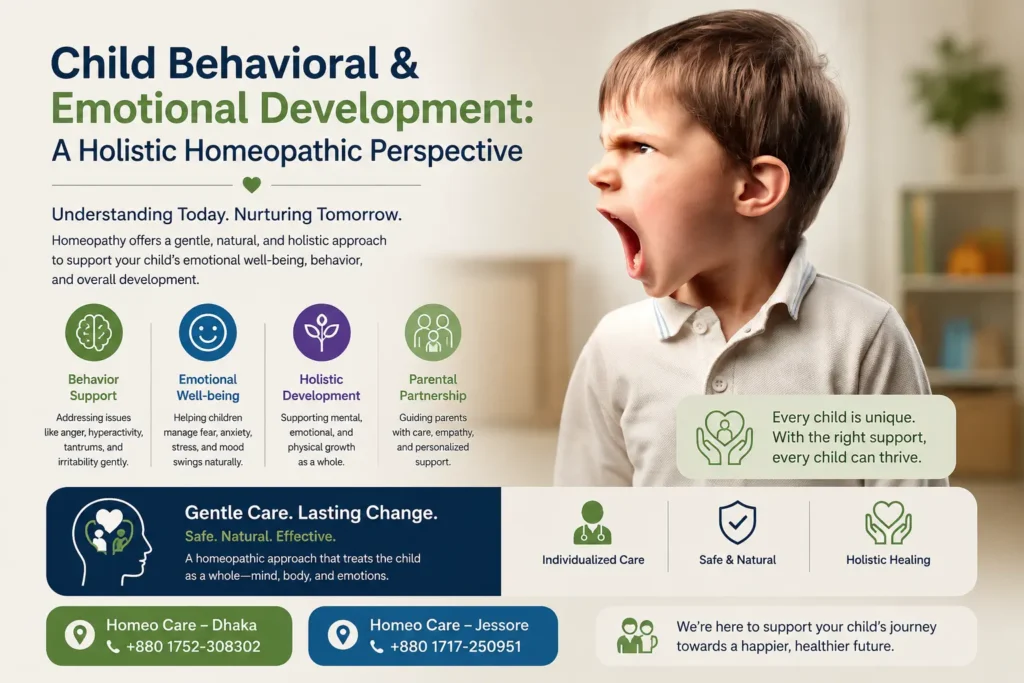
Behavioral and emotional development plays a fundamental role in shaping a child’s personality, learning abilities, relationships, and overall well-being. From infancy through adolescence, children continuously develop new ways of thinking, expressing emotions, solving problems, communicating with others, and adapting to the world around them.
Every child grows at their own pace. While some children naturally adapt to new situations with confidence, others may experience challenges such as hyperactivity, poor concentration, anxiety, emotional sensitivity, temper tantrums, social withdrawal, or learning difficulties. In many cases, these behaviors are part of normal development. However, when such concerns become persistent or begin affecting school performance, family life, friendships, or emotional well-being, a comprehensive professional evaluation may be beneficial.
Understanding behavioral and emotional development is not simply about identifying problems—it is about recognizing each child’s unique strengths, developmental needs, and opportunities for healthy growth. Early recognition and appropriate support can help children build resilience, confidence, emotional intelligence, and lifelong coping skills.
What is Child Behavioral & Emotional Development?
Child behavioral and emotional development refers to the gradual process through which children learn to understand and manage emotions, communicate effectively, develop social relationships, regulate behavior, solve problems, and adapt to different environments. Healthy development is influenced by genetics, family relationships, nutrition, sleep, education, physical health, emotional security, and life experiences.
When behavioral or emotional challenges persist or interfere with daily functioning, professional assessment can help identify underlying developmental, psychological, educational, or medical factors and guide appropriate support.
At a Glance
Parents may consider seeking professional advice if their child experiences:
- Persistent hyperactivity or impulsive behavior
- Difficulty concentrating or completing schoolwork
- Frequent emotional outbursts or aggression
- Excessive anxiety or fearfulness
- Social withdrawal or difficulty making friends
- Poor memory or learning challenges
- Sleep disturbances affecting daytime behavior
- Delayed developmental milestones
- Sudden behavioral changes without an obvious cause
- Difficulties that significantly affect family life or school performance
Early evaluation does not necessarily mean a child has a disorder. It can help families better understand the child’s individual needs and identify supportive strategies.
Why Child Behavioral & Emotional Development Matters
A child’s emotional well-being influences nearly every aspect of development. Emotional regulation affects learning, attention, relationships, confidence, physical health, and the ability to cope with challenges throughout life.
Research in child development shows that the early years are a period of remarkable brain growth. During this time, positive relationships, healthy routines, adequate nutrition, quality sleep, and supportive learning environments contribute significantly to cognitive, emotional, and social development.
Conversely, ongoing stress, bullying, family conflict, chronic sleep problems, nutritional deficiencies, excessive screen time, or untreated developmental concerns may affect a child’s emotional regulation, behavior, and academic performance.
Supporting healthy development involves looking beyond isolated symptoms to understand the child’s overall environment, developmental history, and individual characteristics.
Understanding the Whole Child
Children communicate through behavior as much as through words. A child who appears inattentive, irritable, withdrawn, or frequently disruptive may be responding to emotional stress, developmental differences, learning challenges, health issues, or changes in their environment.
Rather than asking only, “What behavior is the child showing?” parents and healthcare professionals should also consider:
- What emotions might the child be experiencing?
- When did the behavior begin?
- Are there patterns or triggers?
- How is the behavior affecting daily life?
- Are there concerns related to learning, sleep, nutrition, or social interaction?
- What strengths does the child demonstrate?
This whole-child perspective helps guide a more individualized understanding of behavioral and emotional needs.
Common Concerns Parents Notice
Many families seek guidance because their child experiences one or more of the following:
- Hyperactivity or constant restlessness
- Short attention span
- Poor concentration during studies
- Forgetfulness
- Frequent anger or temper tantrums
- Anxiety or excessive fears
- Emotional sensitivity
- Separation anxiety
- Difficulty following instructions
- Poor academic performance
- Learning difficulties
- Social withdrawal
- Low self-confidence
- Difficulty expressing emotions
- Sleep disturbances
- Excessive screen dependence
- Nail biting or other stress-related habits
These concerns can arise from a wide range of factors, including normal developmental variation, environmental influences, neurodevelopmental conditions, emotional stress, or physical health issues. A careful assessment helps determine the most appropriate course of action.
A Holistic Perspective on Child Development
Healthy child development involves much more than academic achievement or good behavior. It encompasses emotional resilience, physical health, cognitive abilities, communication skills, family relationships, and social development.
Families often benefit from a comprehensive approach that may include:
- Developmental assessment
- Parenting guidance
- Educational support
- Healthy sleep routines
- Balanced nutrition
- Regular physical activity
- Emotional support
- Behavioral interventions when appropriate
- Individualized healthcare based on the child’s specific needs
Some families also choose individualized homeopathic care as part of their child’s overall care plan. Homeopathy focuses on the individual child’s physical, emotional, and behavioral characteristics when selecting remedies. It should complement, not replace, appropriate medical evaluation and evidence-based interventions when these are indicated.
Meet Your Doctor
DHMS (Dhaka), BHMS (DU) Apprentice, PG Hom. (London), MPH (Nutrition) IU, MA (NU)
Homeopathic Doctor • Clinical Nutritionist • Lecturer (Physiology Department)
With more than 14 years of clinical experience, Dr. Md. Hasanuzzaman provides individualized homeopathic consultations for children and adults with a focus on pediatrics, women’s health, infertility, behavioral and emotional concerns, chronic diseases, pain management, and nutrition.
He currently serves as a Lecturer in the Department of Physiology at Noagaon Homeopathic Medical College and Hospital and is the Founder Director of the Homeopathic Research and Development Foundation (HRDF). His practice emphasizes careful case evaluation, patient education, and individualized treatment planning.
Government Registration (BHMEC): H-22527
Online and in-person consultations are available through Homeo Care clinics in Dhaka and Jashore, serving patients from across Bangladesh.
Understanding Child Behavioral & Emotional Development: How Children Grow, Learn, and Build Emotional Intelligence
What Is Child Behavioral & Emotional Development?
Child behavioral and emotional development is the continuous process through which children learn to think, feel, communicate, behave, solve problems, and interact with the people around them. These abilities begin developing from birth and continue throughout childhood and adolescence, shaping a child’s personality, relationships, academic performance, and future mental well-being.
Development is not limited to physical growth. As children mature, their brains develop new neural connections that support language, memory, emotional regulation, decision-making, attention, creativity, and social understanding. Each new experience—whether positive or challenging—helps shape these connections.
Behavior is often a child’s way of communicating needs, feelings, or difficulties. A toddler may express frustration through tantrums because they cannot yet explain their emotions with words. An older child struggling with anxiety may become withdrawn or avoid school. Understanding the reasons behind behavior is essential to providing appropriate support.
Healthy behavioral and emotional development depends on the interaction of biological, psychological, social, educational, and environmental factors. Every child develops at a unique pace, and temporary differences do not necessarily indicate a developmental disorder.
The Developing Brain: Why Early Childhood Matters
The human brain undergoes remarkable growth during the first years of life. During this period, billions of neural connections are formed and strengthened through everyday experiences such as talking, playing, reading, exploring, and interacting with caregivers.
Positive experiences help build strong brain architecture, while prolonged exposure to significant stress without adequate support may affect emotional regulation, learning, and behavior.
Several everyday experiences contribute to healthy brain development, including:
- Loving and responsive caregiving
- Safe and stable family relationships
- Adequate sleep
- Balanced nutrition
- Physical activity
- Creative play
- Reading and storytelling
- Positive social interactions
- Opportunities to explore and solve problems
- Consistent routines
These experiences help children develop confidence, resilience, curiosity, and the ability to manage emotions effectively.
The Five Pillars of Child Development
Behavioral and emotional growth does not occur in isolation. It develops alongside several interconnected areas of child development.
1. Cognitive Development
Cognitive development refers to a child’s ability to think, remember, understand, reason, and solve problems. As children grow, they gradually develop:
- Attention and concentration
- Memory
- Language comprehension
- Logical thinking
- Problem-solving skills
- Decision-making abilities
- Academic learning
Difficulties in cognitive development may affect school performance, attention span, and learning confidence.
2. Emotional Development
Emotional development involves recognizing, expressing, and managing emotions in healthy ways.
Children gradually learn to:
- Recognize happiness, sadness, anger, fear, and frustration
- Express emotions appropriately
- Develop empathy
- Build self-confidence
- Cope with disappointment
- Adapt to change
- Manage stress
Children who struggle with emotional regulation may experience frequent mood swings, intense frustration, excessive anxiety, or emotional outbursts.
3. Social Development
Social development enables children to build healthy relationships with family members, classmates, teachers, and peers.
Important social skills include:
- Sharing
- Cooperation
- Taking turns
- Listening
- Respecting others
- Conflict resolution
- Teamwork
- Understanding social cues
- Building friendships
Positive social experiences contribute significantly to emotional well-being and self-esteem.
4. Language and Communication Development
Communication extends beyond speaking. It includes understanding language, expressing ideas, interpreting facial expressions, and using non-verbal communication.
Children develop:
- Vocabulary
- Sentence formation
- Listening skills
- Reading readiness
- Storytelling
- Conversation skills
- Emotional expression through language
Delays in communication may sometimes contribute to frustration or behavioral challenges because children cannot easily express their needs.
5. Behavioral Self-Regulation
Self-regulation is the ability to control thoughts, emotions, and actions according to different situations.
Children gradually learn to:
- Wait patiently
- Follow instructions
- Manage frustration
- Control impulses
- Complete tasks
- Transition between activities
- Adapt to classroom routines
These skills become increasingly important as children enter school and interact with others.
Emotional Intelligence: A Lifelong Skill
Emotional intelligence refers to the ability to recognize, understand, express, and manage emotions while responding appropriately to the emotions of others.
Children with well-developed emotional intelligence often demonstrate:
- Better communication
- Improved friendships
- Greater confidence
- Healthy coping strategies
- Better classroom behavior
- Stronger academic engagement
- Improved resilience during stressful situations
Parents can nurture emotional intelligence by encouraging open conversations, validating emotions, modeling calm behavior, and teaching constructive ways to solve problems.
Understanding Executive Function
Executive functions are the brain’s “management system.” These higher-level thinking skills help children organize thoughts, regulate behavior, and achieve goals.
Executive function includes:
- Planning
- Organization
- Attention control
- Working memory
- Flexible thinking
- Time management
- Self-control
- Decision-making
When executive function skills are underdeveloped, children may appear forgetful, disorganized, impulsive, or easily distracted. These difficulties can occur for various reasons and should be assessed in the context of the child’s overall development.
Why Children Behave Differently
No two children have identical personalities or developmental journeys. Differences in behavior often reflect a combination of individual temperament, family environment, health, learning style, and life experiences.
Some children are naturally:
- Highly active
- Quiet and observant
- Sensitive
- Independent
- Curious
- Cautious
- Outgoing
- Reserved
These personality differences are usually part of normal development. The focus should be on understanding the child’s needs rather than comparing them with siblings or classmates.
Developmental Milestones: What Parents Can Expect
Although every child develops at an individual pace, certain milestones provide general guidance.
Infants (0–12 Months)
Children typically begin to:
- Smile socially
- Respond to familiar voices
- Develop eye contact
- Show curiosity
- Express basic emotions
- Recognize caregivers
- Begin babbling
Toddlers (1–3 Years)
Children usually:
- Explore independently
- Develop language rapidly
- Experience occasional temper tantrums
- Learn simple instructions
- Show affection
- Begin pretend play
- Express preferences
Preschool Children (3–5 Years)
Many children begin to:
- Cooperate during play
- Develop friendships
- Improve emotional expression
- Follow routines
- Increase attention span
- Ask many questions
- Develop imagination
School-Age Children (6–12 Years)
Development often includes:
- Better concentration
- Increased independence
- Academic learning
- Teamwork
- Emotional self-control
- Problem-solving
- Responsibility
Adolescents
Teenagers continue developing:
- Identity
- Emotional independence
- Decision-making
- Long-term planning
- Social responsibility
- Abstract thinking
- Self-awareness
Because the brain continues to mature during adolescence, emotional ups and downs can be a normal part of this stage while still warranting support if they become severe or persistent.
Every Child Develops at a Different Pace
Parents often compare their child with classmates or siblings. However, developmental variation is common, and many children reach milestones slightly earlier or later than others.
Rather than focusing solely on age-based expectations, parents should pay attention to the overall pattern of development. Consistent progress, curiosity, learning, and social engagement are often more informative than isolated milestones.
If developmental differences become persistent, interfere with daily functioning, or are accompanied by concerns about communication, learning, behavior, or emotional well-being, a professional assessment can help clarify the underlying causes and identify appropriate support.
Common Behavioral & Emotional Challenges in Children: Understanding Hyperactivity, Attention Difficulties, Learning Problems, and Memory Development
Behavioral and emotional challenges are among the most common reasons parents seek professional advice during childhood. Many children occasionally become restless, emotional, distracted, or forgetful, especially during periods of rapid growth or life changes. In most cases, these behaviors are temporary and improve with maturity, supportive parenting, healthy routines, and appropriate educational guidance.
However, when behavioral changes become persistent, interfere with learning, disrupt family relationships, or affect a child’s confidence and social interactions, they deserve careful evaluation.
Understanding the underlying causes—not just the visible behavior—is the first step toward providing effective support.
Why Do Behavioral Problems Develop?
Children rarely misbehave “without a reason.” Their behavior often reflects an interaction between brain development, personality, emotional experiences, family relationships, school environment, sleep, nutrition, and overall health.
Behavioral concerns may arise due to one or more contributing factors, including:
- Individual temperament
- Developmental differences
- Emotional stress
- Anxiety
- Learning challenges
- Poor sleep
- Nutritional deficiencies
- Family conflict
- School-related difficulties
- Bullying
- Excessive digital screen exposure
- Neurodevelopmental conditions such as ADHD or Autism Spectrum Disorder (ASD)
Rather than viewing behavior as “good” or “bad,” healthcare professionals aim to understand why the behavior occurs and how it affects the child’s daily life.
Hyperactivity: When Is High Energy a Concern?
Many children are naturally energetic. Running, climbing, exploring, and active play are normal parts of healthy development. High energy alone does not necessarily indicate a behavioral disorder.
Parents may become concerned when hyperactivity is persistent and significantly affects the child’s ability to function at home, school, or in social settings.
Children experiencing significant hyperactivity may:
- Find it difficult to remain seated
- Constantly move, fidget, or climb
- Interrupt conversations frequently
- Speak excessively
- Act impulsively without considering consequences
- Struggle to wait for their turn
- Become easily distracted during tasks
- Leave activities unfinished
These behaviors may occur in several settings rather than only at home or school.
Persistent hyperactivity should be assessed in the context of the child’s developmental stage, learning abilities, emotional health, and overall functioning.
Hyperactivity vs Normal Childhood Activity
One of the most common concerns parents have is distinguishing between a naturally active child and a child who may need professional evaluation.
A highly active child usually:
- Can focus on enjoyable activities
- Follows rules most of the time
- Responds to consistent guidance
- Adjusts behavior when reminded
- Functions well at school and home
A child with persistent attention or hyperactivity concerns may:
- Experience difficulties in multiple settings
- Have ongoing problems completing tasks
- Show impulsive behavior despite consistent guidance
- Face academic or social challenges related to inattention or hyperactivity
Only a qualified healthcare professional can determine whether further assessment is needed.
Understanding Attention Difficulties
Attention is a complex brain function that allows children to focus, organize information, ignore distractions, and complete tasks.
Young children naturally have shorter attention spans than older children. Expectations should always be age-appropriate.
Persistent attention difficulties may appear as:
- Frequently losing focus
- Forgetting instructions
- Making careless mistakes
- Difficulty completing homework
- Frequently misplacing belongings
- Becoming distracted by surrounding activities
- Poor organization
- Avoiding tasks requiring sustained concentration
Attention difficulties do not always indicate ADHD. Sleep problems, anxiety, hearing or vision concerns, emotional stress, learning difficulties, and other medical or environmental factors may also contribute.
A comprehensive assessment is important before reaching conclusions.
Attention-Deficit/Hyperactivity Disorder (ADHD): An Overview
Attention-Deficit/Hyperactivity Disorder (ADHD) is a neurodevelopmental condition characterized by persistent patterns of inattention, hyperactivity, and impulsivity that interfere with daily functioning.
Symptoms usually begin during childhood, although they may become more noticeable after starting school when greater attention and self-regulation are expected.
Common features may include:
Inattention
- Difficulty sustaining attention
- Frequently forgetting daily activities
- Losing school materials
- Poor task completion
- Easily distracted
- Difficulty following multi-step instructions
Hyperactivity
- Constant movement
- Difficulty sitting still
- Excessive talking
- Restlessness
- Fidgeting
Impulsivity
- Interrupting others
- Acting before thinking
- Difficulty waiting
- Risk-taking behavior
- Emotional impulsiveness
Diagnosis requires a comprehensive evaluation by appropriately qualified healthcare professionals and should not be based on online checklists alone.
How Attention Difficulties Affect School Performance
Children with persistent attention challenges often work much harder than others to complete the same academic tasks.
Common school-related difficulties include:
- Incomplete homework
- Poor classroom participation
- Difficulty following lessons
- Slow reading comprehension
- Frequent careless mistakes
- Disorganization
- Poor time management
- Difficulty remembering instructions
- Reduced confidence
Over time, repeated academic struggles may affect self-esteem, motivation, and emotional well-being if appropriate support is not provided.
Learning Difficulties: More Than Academic Performance
Learning involves much more than intelligence.
Many children with learning difficulties have average or above-average intelligence but process information differently.
Learning challenges may affect:
- Reading
- Writing
- Spelling
- Mathematics
- Listening comprehension
- Language processing
- Memory
- Organization
Children may become frustrated because they understand concepts but cannot demonstrate their knowledge effectively.
Early identification allows teachers, parents, and healthcare professionals to develop supportive educational strategies.
Signs That May Suggest Learning Challenges
Parents and teachers may notice:
- Slow reading progress
- Difficulty remembering new information
- Poor handwriting
- Frequent spelling mistakes
- Difficulty copying from the board
- Confusion with numbers
- Trouble understanding instructions
- Avoiding homework
- Low academic confidence
These signs do not automatically indicate a learning disorder but should prompt further assessment if they persist.
Memory Development in Children
Memory develops gradually throughout childhood.
Children use different types of memory to learn and function every day.
These include:
Working Memory
Allows children to temporarily hold and use information.
Examples:
- Remembering classroom instructions
- Solving mathematical problems
- Following conversations
Short-Term Memory
Stores information briefly before it is either forgotten or transferred into long-term memory.
Examples:
- Remembering a phone number long enough to write it down
- Recalling today’s homework assignment
Long-Term Memory
Stores knowledge, experiences, language, and learned skills over extended periods.
Examples:
- Vocabulary
- Multiplication tables
- Personal experiences
- General knowledge
Healthy development depends on all three working together.
Why Some Children Have Poor Memory
Memory difficulties may be influenced by several factors, including:
- Inadequate sleep
- Poor nutrition
- Iron deficiency
- Vitamin deficiencies
- Anxiety
- Depression
- Chronic stress
- Attention difficulties
- Learning disorders
- Excessive screen exposure
- Medical conditions affecting cognition
Because memory problems can have many causes, evaluation should consider the child’s overall health, emotional well-being, educational environment, and developmental history.
Poor Concentration: Looking Beyond the Symptoms
Many parents describe their child as having “poor concentration.” However, concentration is influenced by multiple interconnected factors.
A child may struggle to concentrate because of:
- Anxiety
- Lack of sleep
- Hunger
- Classroom distractions
- Emotional stress
- Vision or hearing problems
- Excessive digital device use
- Learning difficulties
- Neurodevelopmental conditions
Addressing only the visible symptom without understanding its underlying cause may not provide lasting improvement.
How Parents Can Support Attention and Learning at Home
Parents play an essential role in creating an environment that supports healthy brain development and learning.
Helpful strategies include:
- Establish consistent daily routines.
- Ensure adequate sleep based on the child’s age.
- Provide balanced meals with appropriate nutrients.
- Encourage regular physical activity.
- Create a quiet study environment.
- Break homework into smaller, manageable tasks.
- Use positive reinforcement rather than harsh punishment.
- Read together every day.
- Limit unnecessary screen time.
- Celebrate effort as well as achievement.
These simple practices can strengthen attention, confidence, and emotional resilience over time.
A Holistic Perspective
Children’s behavior, learning, emotions, and physical health are closely interconnected. Rather than focusing solely on one symptom, a comprehensive assessment considers the child’s developmental history, family environment, emotional experiences, educational challenges, lifestyle, sleep, nutrition, and overall health.
Some families choose individualized homeopathic care as part of a broader, multidisciplinary approach. In homeopathic practice, the consultation typically explores the child’s unique physical, emotional, and behavioral characteristics alongside developmental history. Homeopathic care should complement—not replace—appropriate medical, psychological, educational, or therapeutic interventions when these are recommended.
Every Behavior Has an Emotional Story
Children communicate through both words and behavior. While adults often express stress by talking about their feelings, children may show emotional distress through crying, anger, withdrawal, clinginess, sleep disturbances, or changes in behavior.
A child who suddenly becomes aggressive may be feeling overwhelmed. A quiet child who refuses to attend school may be struggling with anxiety. A preschooler who frequently throws tantrums may not yet have the emotional skills needed to express frustration appropriately.
Understanding the emotional meaning behind a child’s behavior allows parents, teachers, and healthcare professionals to provide compassionate and effective support rather than focusing only on discipline or punishment.
Behavior should be viewed as a form of communication, especially in younger children who are still learning to identify and express complex emotions.
What Is Emotional Regulation?
Emotional regulation is the ability to recognize, understand, express, and manage emotions in healthy and age-appropriate ways. It is one of the most important developmental skills a child acquires during childhood.
Children are not born with mature emotional control. Instead, they gradually develop these abilities through brain development, nurturing relationships, positive life experiences, and consistent guidance from parents and caregivers.
As emotional regulation improves, children learn to:
- Calm themselves after becoming upset
- Express feelings using words instead of aggression
- Wait patiently for their turn
- Handle disappointment more effectively
- Adapt to changes in routine
- Solve problems calmly
- Build healthy relationships with others
- Develop resilience after setbacks
These skills continue developing throughout childhood and adolescence.
Signs That a Child May Be Struggling with Emotional Regulation
Occasional emotional outbursts are a normal part of childhood. However, persistent difficulties that interfere with daily life may indicate the need for additional support.
Parents may notice:
- Frequent temper tantrums beyond the expected developmental stage
- Sudden mood changes
- Difficulty calming down after becoming upset
- Extreme frustration over minor problems
- Frequent crying without an obvious reason
- Aggressive reactions toward siblings or classmates
- Low frustration tolerance
- Emotional sensitivity to criticism
- Difficulty coping with routine changes
- Intense reactions to disappointment
These behaviors do not automatically indicate a mental health disorder. They should always be considered within the child’s age, developmental stage, environment, and overall health.
Childhood Anxiety: More Common Than Many Parents Realize
Feeling worried before an examination, starting a new school, or meeting unfamiliar people is a normal part of childhood. Anxiety becomes a concern when worries are excessive, persistent, or interfere with everyday activities.
Childhood anxiety can affect learning, friendships, sleep, family relationships, and self-confidence if left unrecognized.
Unlike adults, anxious children may not always say, “I feel anxious.” Instead, they often express anxiety through behavior.
Common Signs of Anxiety in Children
Children experiencing anxiety may show one or more of the following:
- Excessive worrying
- Fear of being separated from parents
- Avoiding school
- Frequent crying
- Irritability
- Difficulty sleeping
- Nightmares
- Stomach discomfort without a clear medical cause
- Headaches associated with stressful situations
- Nail biting
- Hair pulling or repetitive habits
- Social withdrawal
- Difficulty concentrating
- Seeking constant reassurance
Some children become unusually quiet, while others appear restless or irritable.
Common Causes of Childhood Anxiety
Anxiety usually develops through the interaction of multiple biological and environmental factors rather than a single cause.
Possible contributing factors include:
- Genetic predisposition
- Family history of anxiety
- Academic pressure
- Bullying
- Family conflict
- Major life changes
- Chronic illness
- Traumatic experiences
- Excessive perfectionism
- Sleep deprivation
- Social challenges
- Excessive exposure to frightening online content
Identifying the contributing factors helps guide appropriate support.
Separation Anxiety: A Normal Stage or Something More?
Young children naturally form strong emotional bonds with their parents and caregivers. Temporary distress during separation is common during infancy and toddlerhood.
However, when intense separation anxiety continues beyond the expected developmental stage or significantly disrupts daily activities, professional guidance may be beneficial.
Children experiencing persistent separation anxiety may:
- Refuse to attend school
- Become extremely distressed when a parent leaves
- Fear that something bad will happen to family members
- Avoid overnight stays away from home
- Insist on sleeping beside parents
- Frequently complain of stomach pain before school
- Cry excessively during separations
Supportive parenting, gradual exposure to independence, reassurance, and professional assessment when necessary can help children develop greater confidence.
Childhood Fears: Understanding Normal Emotional Development
Fear is an essential protective emotion. Children commonly experience different fears as they grow and develop.
Examples include:
Toddlers
- Loud noises
- Strangers
- Separation from parents
Preschool Children
- Darkness
- Monsters
- Animals
- Thunderstorms
School-Age Children
- Academic performance
- Social acceptance
- Physical injury
- Failure
Adolescents
- Peer relationships
- Future expectations
- Body image
- Social judgment
Most childhood fears gradually improve with emotional maturity, reassurance, and positive experiences.
Persistent fears that interfere with normal functioning deserve professional evaluation.
Aggressive Behavior in Children
Aggressive behavior is one of the most distressing concerns for parents and teachers.
Aggression may appear as:
- Hitting
- Kicking
- Biting
- Throwing objects
- Verbal aggression
- Destroying property
- Frequent arguments
- Intimidating siblings
- Physical fights
Although aggression should never be ignored, it is important to understand that it often represents an underlying emotional struggle rather than deliberate misconduct.
Why Do Some Children Become Aggressive?
Aggression rarely develops without contributing factors.
Possible influences include:
Emotional Factors
- Anxiety
- Frustration
- Poor emotional regulation
- Jealousy
- Low self-esteem
Family Factors
- Inconsistent discipline
- High family stress
- Domestic conflict
- Lack of emotional support
School Factors
- Bullying
- Academic difficulties
- Social rejection
- Classroom frustration
Health Factors
- Poor sleep
- Chronic illness
- Attention difficulties
- Neurodevelopmental conditions
Understanding these influences helps families address the root causes rather than focusing only on punishment.
Responding to Aggressive Behavior Positively
Children benefit most from calm, consistent, and supportive guidance.
Parents can help by:
- Remaining calm during conflicts
- Setting clear and consistent boundaries
- Teaching appropriate emotional expression
- Encouraging problem-solving skills
- Praising positive behavior
- Avoiding harsh punishment
- Modeling respectful communication
- Maintaining predictable routines
When aggressive behavior becomes frequent, severe, or causes harm to others, professional assessment is recommended.
A Holistic Perspective on Emotional Well-being
Healthy emotional development involves much more than managing individual behaviors. A child’s emotional well-being is influenced by physical health, family relationships, school experiences, sleep quality, nutrition, opportunities for play, and supportive social connections.
A comprehensive assessment explores the child as a whole rather than focusing on a single symptom. This whole-child approach may involve collaboration between parents, teachers, pediatricians, psychologists, and other healthcare professionals when appropriate.
Some families also choose individualized homeopathic care as part of their child’s broader care plan. Homeopathic consultations typically consider the child’s emotional characteristics, behavioral patterns, developmental history, physical health, and overall constitution when selecting individualized remedies. Homeopathy should be used alongside—not as a replacement for—appropriate medical, psychological, educational, or therapeutic care when these services are indicated.
Holistic Management of Child Behavioral & Emotional Development: Healthy Lifestyle, Nutrition, Sleep & Physical Activity
Supporting the Whole Child: A Holistic Approach to Healthy Development
Every child is unique. While behavioral and emotional concerns may appear as attention difficulties, anxiety, irritability, or poor concentration, these behaviors are often influenced by many interconnected factors rather than a single cause.
A truly holistic approach recognizes that a child’s emotional well-being is shaped by their physical health, nutrition, sleep, family relationships, school experiences, opportunities for play, and sense of emotional security.
Rather than focusing only on reducing symptoms, holistic care aims to create an environment where children can grow, learn, and thrive. This may include healthy lifestyle habits, supportive parenting, educational strategies, professional assessment when needed, and, for some families, individualized homeopathic care as part of a broader management plan.
The goal is not simply to help children behave better—it is to help them become healthier, happier, more confident, and emotionally resilient.
Why Lifestyle Habits Matter
The developing brain is highly responsive to everyday experiences. Consistent routines, nutritious food, quality sleep, physical activity, and positive relationships all contribute to healthy brain development.
Healthy habits can support:
- Emotional regulation
- Attention and concentration
- Learning and memory
- Physical growth
- Social confidence
- Stress management
- Better sleep
- Overall well-being
Small improvements in daily routines often have a meaningful impact over time.
Nutrition and Brain Development
The brain requires a steady supply of nutrients to support learning, memory, emotional regulation, and physical growth. A balanced diet provides the energy and building blocks needed for healthy development.
Parents should aim to include a variety of:
- Fresh vegetables and fruits
- Whole grains
- Protein-rich foods
- Healthy fats
- Dairy or appropriate alternatives
- Adequate water throughout the day
Children who skip meals or rely heavily on highly processed foods may experience fluctuations in energy and attention. While no single food can “fix” behavioral challenges, establishing healthy eating patterns supports overall health and development.
If parents are concerned about nutritional deficiencies or poor growth, consultation with an appropriately qualified healthcare professional or nutrition specialist is recommended.
The Role of Nutrition in Learning and Concentration
Good nutrition supports the brain’s ability to process information, maintain attention, and regulate emotions.
Helpful habits include:
- Eating breakfast regularly
- Limiting sugar-sweetened beverages
- Encouraging balanced meals
- Offering healthy snacks between meals when appropriate
- Maintaining regular meal times
- Avoiding excessive consumption of ultra-processed foods
Parents should remember that eating habits develop gradually. Creating a positive mealtime environment is often more effective than forcing children to eat specific foods.
Sleep: One of the Most Powerful Tools for Healthy Behavior
Sleep is essential for healthy brain development, emotional balance, memory consolidation, and physical growth. During sleep, the brain processes new information, strengthens learning, and restores the body’s natural functions.
Children who do not get sufficient, high-quality sleep may experience:
- Irritability
- Difficulty concentrating
- Hyperactive behavior
- Mood swings
- Daytime fatigue
- Reduced academic performance
- Poor emotional regulation
Because sleep problems can mimic or worsen behavioral concerns, they should always be considered during a comprehensive assessment.
Building Healthy Sleep Habits
Parents can encourage better sleep by establishing consistent bedtime routines.
Helpful strategies include:
- Maintaining regular sleep and wake times
- Creating a calm bedtime routine
- Reducing stimulating activities before bed
- Keeping bedrooms quiet, comfortable, and dark
- Avoiding screens for at least one hour before bedtime
- Encouraging relaxing activities such as reading together
If a child experiences persistent snoring, frequent nightmares, significant insomnia, or daytime sleepiness, medical evaluation may be appropriate.
Physical Activity and Emotional Well-being
Children are naturally active learners. Movement supports not only physical health but also emotional regulation, attention, confidence, and social development.
Regular physical activity can help children:
- Improve mood
- Develop coordination
- Build self-confidence
- Reduce stress
- Strengthen social skills
- Enhance concentration
- Support healthy sleep
Activities do not need to be highly structured. Outdoor play, cycling, running, dancing, swimming, and team sports all provide valuable opportunities for growth.
Parents should encourage children to spend time outdoors whenever possible, balancing structured activities with free play and family interaction.
The Importance of Play
Play is one of the most effective ways children learn.
Through play, children develop:
- Creativity
- Language skills
- Problem-solving abilities
- Emotional expression
- Social cooperation
- Self-control
- Imagination
Unstructured play also allows children to practice decision-making, negotiate with peers, and develop resilience after small disappointments.
Parents should view play not as a distraction from learning but as an essential part of healthy childhood development.
Creating a Supportive Home Environment
Children feel more secure when they grow up in an environment that is predictable, respectful, and emotionally supportive.
Families can encourage healthy development by:
- Maintaining daily routines
- Spending quality time together
- Encouraging open communication
- Listening without immediate judgment
- Praising effort rather than perfection
- Setting clear but reasonable expectations
- Solving problems together
- Demonstrating kindness and respect
Children are more likely to cooperate when they feel emotionally safe and understood.
Managing Everyday Stress
Even young children experience stress. School transitions, examinations, family changes, conflicts with friends, or new responsibilities may affect emotions and behavior.
Parents can help children manage stress by:
- Encouraging conversations about feelings
- Teaching simple relaxation techniques
- Allowing time for recreation and hobbies
- Maintaining healthy routines
- Providing reassurance during difficult situations
- Modeling calm responses to challenges
Developing healthy coping skills during childhood prepares children to manage future life challenges more effectively.
A Holistic Perspective on Child Well-being
Healthy behavioral and emotional development is rarely influenced by a single factor. Nutrition, sleep, physical activity, emotional support, family relationships, education, and overall health all work together to shape a child’s development.
For this reason, holistic care focuses on understanding the whole child rather than treating isolated behaviors.
Some families choose individualized homeopathic care as part of this broader approach. Homeopathic consultations consider the child’s physical symptoms, emotional characteristics, developmental history, and overall health when selecting individualized remedies. Homeopathy should complement appropriate medical, psychological, educational, and therapeutic care when these services are recommended.
Positive Parenting, Emotional Intelligence & Individualized Homeopathic Care: Building a Strong Foundation for Lifelong Well-being
Positive parenting, emotional intelligence in children, child behavior management, screen time for children, individualized homeopathic care, child behavioral treatment Bangladesh, pediatric homeopathy.
Parents Are a Child’s First and Most Important Teachers
Parents play a central role in shaping a child’s emotional health, confidence, behavior, and ability to cope with life’s challenges. While schools, friends, and communities all contribute to development, the family environment provides the foundation on which children build their understanding of relationships, trust, and self-worth.
Children learn not only from what parents say, but also from what they observe every day. Calm communication, patience, empathy, and consistency help children develop healthy emotional habits that often last into adulthood.
Positive parenting does not mean allowing every behavior or avoiding discipline. Instead, it focuses on guiding children with respect, clear expectations, and emotional support while helping them learn responsibility and self-control.
The Principles of Positive Parenting
Positive parenting encourages healthy emotional development while maintaining appropriate boundaries.
Parents can support their child’s development by:
- Listening carefully before reacting.
- Acknowledging emotions, even when correcting behavior.
- Using calm and respectful communication.
- Setting clear and age-appropriate expectations.
- Being consistent with household rules.
- Praising effort, honesty, and perseverance rather than only achievements.
- Encouraging independence while providing guidance.
- Spending regular quality time together.
Children who feel emotionally secure are often more willing to cooperate, solve problems, and communicate openly.
Teaching Emotional Intelligence
Emotional intelligence is one of the strongest predictors of healthy relationships, resilience, and effective problem-solving. It involves recognizing emotions, understanding their causes, and responding in constructive ways.
Parents can help children build emotional intelligence by:
Naming Emotions
Help children identify what they are feeling.
Instead of saying:
“Stop crying.”
Try:
“You seem disappointed because the game ended.”
This helps children connect words with emotions and gradually improve self-awareness.
Accepting Feelings While Guiding Behavior
Children should learn that all emotions are acceptable, but not every behavior is.
For example:
- Feeling angry is normal.
- Hitting another child is not acceptable.
This distinction teaches emotional responsibility without making children feel ashamed of their feelings.
Encouraging Problem-Solving
Rather than solving every difficulty immediately, encourage children to think of possible solutions.
Simple questions such as:
- “What do you think would help?”
- “How could we solve this together?”
- “What might you do differently next time?”
help develop confidence and independent thinking.
Modeling Healthy Behavior
Children learn by observing adults.
Parents who manage stress calmly, apologize when appropriate, and communicate respectfully provide powerful examples that children naturally imitate.
Building Self-Confidence
Confident children are more likely to explore new experiences, develop friendships, and cope with setbacks.
Parents can encourage confidence by:
- Recognizing effort rather than perfection.
- Allowing children to make age-appropriate decisions.
- Celebrating small achievements.
- Encouraging hobbies and creative activities.
- Avoiding unnecessary comparisons with siblings or classmates.
- Supporting independence while remaining available.
Confidence grows through repeated opportunities to succeed, make mistakes, and learn.
Working Together with Schools
Parents and teachers share the common goal of supporting children’s development.
Open communication between home and school helps identify strengths, challenges, and practical strategies that can be used consistently in both environments.
Families may benefit from discussing:
- Classroom behavior
- Academic progress
- Social relationships
- Attention and concentration
- Emotional changes
- Learning strengths
- Areas requiring additional support
When concerns are identified early, collaborative planning can often improve outcomes.
Healthy Digital Screen Habits
Digital technology has become part of everyday life. Educational apps, online learning, and communication tools can offer benefits when used appropriately.
However, excessive recreational screen time may reduce opportunities for physical activity, sleep, face-to-face interaction, reading, and creative play.
Parents can encourage healthy habits by:
- Establishing consistent screen-time rules.
- Creating screen-free family meals.
- Avoiding digital devices before bedtime.
- Encouraging outdoor play and hobbies.
- Monitoring age-appropriate content.
- Modeling balanced technology use.
The goal is not to eliminate technology but to maintain a healthy balance.
Supporting Children During Stressful Life Events
Children may experience emotional changes during periods such as:
- Starting school
- Changing schools
- Moving to a new home
- Birth of a sibling
- Illness in the family
- Divorce or separation
- Loss of a loved one
- Academic examinations
Parents can provide reassurance by maintaining routines, encouraging open conversations, answering questions honestly, and seeking professional guidance if emotional difficulties persist.
The Role of Individualized Homeopathic Care
Some families choose individualized homeopathic care as part of a comprehensive approach to supporting their child’s overall well-being.
Homeopathy is based on the principle that treatment is individualized rather than determined solely by a diagnosis. During a consultation, the practitioner seeks to understand the child’s complete symptom pattern, including physical, emotional, behavioral, and lifestyle factors.
A detailed homeopathic assessment may explore:
- Developmental history
- Emotional characteristics
- Behavioral patterns
- Sleep habits
- Appetite and food preferences
- Family medical history
- Environmental influences
- Stressors at home or school
- General physical health
The purpose of this comprehensive case-taking is to develop an individualized understanding of the child rather than focusing only on isolated symptoms.
Current scientific evidence regarding homeopathy for behavioral and emotional conditions remains mixed. Families considering homeopathic care should discuss their child’s needs with qualified healthcare professionals and continue any recommended medical, psychological, educational, or therapeutic interventions.
What to Expect During a Consultation at Homeo Care
At Homeo Care, consultations are designed to understand the child as a whole person.
A typical consultation may include:
Comprehensive Case History
We discuss the child’s developmental milestones, medical history, behavioral concerns, emotional responses, family background, and lifestyle.
Behavioral and Emotional Assessment
Parents are encouraged to describe the situations in which concerns occur, factors that improve or worsen them, and how they affect daily life.
Lifestyle Review
Nutrition, sleep, school routines, physical activity, and screen habits are reviewed because these factors often influence behavior and emotional well-being.
Individualized Care Planning
Based on the assessment, recommendations may include:
- Parenting guidance
- Lifestyle modifications
- Nutritional advice
- Homeopathic treatment when appropriate
- Referral for additional medical, psychological, or educational evaluation if indicated
This collaborative approach aims to provide families with practical guidance tailored to their child’s individual needs.
When Should Parents Seek Professional Help?
Parents should arrange a professional evaluation if a child experiences:
- Persistent attention or learning difficulties.
- Frequent aggressive behavior.
- Severe anxiety or persistent fears.
- Significant mood changes.
- Ongoing sleep disturbances.
- Loss of previously acquired developmental skills.
- Social withdrawal that affects daily life.
- Behavioral concerns that interfere with school, friendships, or family relationships.
Early assessment does not necessarily mean a child has a disorder. It provides an opportunity to understand the child’s needs and identify appropriate support strategies.
Moving Forward with Confidence
Every child has unique strengths, challenges, and opportunities for growth. Behavioral and emotional development is a journey rather than a destination. With patience, understanding, healthy daily habits, and timely professional guidance when needed, children can develop the confidence, resilience, and life skills they need to thrive.
At Homeo Care Bangladesh, our goal is to partner with families by providing individualized consultations, practical education, and compassionate care that respects each child’s unique developmental journey.
About Homeo Care Bangladesh
Compassionate, Individualized Homeopathic Care for Children and Families
At Homeo Care Bangladesh, we believe that every child deserves compassionate, individualized, and evidence-informed healthcare that considers their unique physical, emotional, behavioral, and developmental needs.
Our approach goes beyond simply addressing symptoms. We take time to understand each child’s personality, developmental history, emotional responses, lifestyle, nutrition, family environment, sleep patterns, educational challenges, and overall health before developing an individualized treatment plan.
We recognize that behavioral and emotional concerns can have many contributing factors. Whenever appropriate, we encourage collaboration with pediatricians, psychologists, speech and language therapists, occupational therapists, teachers, and other healthcare professionals to ensure children receive comprehensive support.
Whether parents seek guidance for attention difficulties, emotional regulation, anxiety, learning challenges, recurrent illnesses, or overall child wellness, our goal is to provide thoughtful assessment, patient education, and personalized homeopathic care as part of a holistic management plan.
Why Parents Choose Homeo Care
Families from across Bangladesh choose Homeo Care because of our commitment to individualized care, patient education, and long-term relationships.
Our practice is built on several guiding principles:
Individualized Consultations
Every child is unique. We conduct detailed consultations that consider emotional, behavioral, developmental, and physical characteristics rather than relying solely on a diagnosis.
Whole-Child Perspective
We evaluate multiple aspects of a child’s health, including:
- Developmental milestones
- Emotional well-being
- Family history
- Nutrition
- Sleep
- Lifestyle
- Learning patterns
- Behavioral concerns
Parent Education
Parents play the most important role in a child’s development. We emphasize practical guidance that families can implement at home alongside professional care.
Holistic Support
Individualized homeopathic care may be considered alongside healthy routines, balanced nutrition, educational support, behavioral strategies, and other evidence-based interventions recommended by qualified healthcare professionals.
Accessible Care
We offer both in-person consultations and online consultation services, making it easier for families across Bangladesh to access professional guidance.
Meet Your Doctor
Dr. Md. Hasanuzzaman
DHMS (Dhaka), BHMS (DU) Apprentice
PG Hom. (London), MPH (Nutrition) IU, MA (NU)
Homeopathic Doctor & Clinical Nutritionist
Professional Highlights
- 14+ Years of Clinical Experience
- Government Registration No. H-22527
- Lecturer, Department of Physiology
- Noagaon Homeopathic Medical College & Hospital
- Founder Director, Homeopathic Research and Development Foundation (HRDF)
- Special interests in:
- Pediatrics
- Behavioral & Emotional Health
- Women’s Health
- Infertility
- Nutrition
- Pain Management
- Chronic Disease Care
Dr. Md. Hasanuzzaman is committed to providing individualized homeopathic consultations with careful case-taking, patient education, and long-term follow-up. His practice emphasizes understanding each patient’s overall health rather than focusing on isolated symptoms.
Frequently Asked Questions (FAQ)
1. What is child behavioral and emotional development?
Child behavioral and emotional development refers to the gradual process through which children learn to understand emotions, regulate behavior, communicate effectively, build relationships, and develop problem-solving skills. Healthy development is influenced by genetics, family environment, nutrition, sleep, education, and life experiences.
2. Are temper tantrums normal?
Temper tantrums are common during early childhood as children learn to manage emotions. Frequent, severe, or age-inappropriate tantrums that significantly affect daily life should be discussed with a qualified healthcare professional.
3. Is every hyperactive child affected by ADHD?
No. Many children are naturally energetic. Persistent inattention, impulsivity, and hyperactivity across multiple settings require a comprehensive professional assessment before ADHD can be diagnosed.
4. Can anxiety affect school performance?
Yes. Anxiety may reduce concentration, confidence, classroom participation, sleep quality, and academic performance. Early recognition and appropriate support can be beneficial.
5. How much screen time is appropriate for children?
Healthy screen habits depend on a child’s age and individual circumstances. Parents should prioritize adequate sleep, physical activity, reading, family interaction, and outdoor play while avoiding excessive recreational screen time.
6. When should parents seek professional evaluation?
Parents should consider professional assessment if behavioral or emotional concerns:
- Persist for several months
- Affect school performance
- Disrupt family relationships
- Cause significant emotional distress
- Interfere with friendships
- Affect normal development
7. Can nutrition influence behavior?
Balanced nutrition supports overall brain development and physical health. Inadequate nutrition or specific deficiencies may contribute to fatigue, poor concentration, or other health concerns. Any suspected nutritional issues should be assessed by an appropriately qualified healthcare professional.
8. What role can homeopathy play?
Some families choose individualized homeopathic care as part of a broader care plan. Homeopathic practitioners consider the child’s overall symptom pattern, personality, emotional characteristics, and physical health. Homeopathy should complement—not replace—appropriate medical, psychological, educational, or therapeutic care when indicated.
9. Does every child develop at the same pace?
No. Children develop at different rates. Variation is often normal, but persistent developmental concerns should be evaluated professionally.
10. Can behavioral concerns improve over time?
Many children benefit from supportive parenting, healthy routines, educational accommodations, behavioral strategies, and appropriate professional care. Outcomes vary depending on the child’s individual circumstances and the underlying causes of their difficulties.
References
This article is based on established principles of child development, pediatric health, behavioral science, and individualized homeopathic practice. The information has been prepared for educational purposes using internationally recognized public health resources and standard medical references.
International Health Organizations
- World Health Organization (WHO). Child Health and Development Resources.
- UNICEF. Early Childhood Development and Positive Parenting Resources.
- Centers for Disease Control and Prevention (CDC). Developmental Milestones and Child Development Guidelines.
- American Academy of Pediatrics (AAP). Developmental and Behavioral Pediatrics.
- National Institute of Mental Health (NIMH). Child and Adolescent Mental Health.
Clinical Guidelines
- National Institute for Health and Care Excellence (NICE).
- ADHD: Diagnosis and Management
- Autism Spectrum Disorder in Children and Young People
- Social, Emotional and Mental Well-being in Children
- Diagnostic and Statistical Manual of Mental Disorders (DSM-5-TR).
American Psychiatric Association.
Child Development & Psychology
- Berk LE.
Child Development. - Papalia DE, Feldman RD.
Human Development. - Piaget J.
The Origins of Intelligence in Children. - Vygotsky LS.
Mind in Society. - Erikson EH.
Childhood and Society.
Pediatric & Nutrition
- Nelson Textbook of Pediatrics.
- American Academy of Pediatrics.
Nutrition and Healthy Lifestyle Recommendations. - WHO Guidelines on Physical Activity, Sedentary Behaviour and Sleep for Children.
Homeopathic Literature
- Samuel Hahnemann.
Organon of Medicine (6th Edition). - Samuel Hahnemann.
The Chronic Diseases. - James Tyler Kent.
Lectures on Homeopathic Philosophy. - Stuart Close.
The Genius of Homeopathy. - H.A. Roberts.
The Principles and Art of Cure by Homeopathy.
Note: Homeopathic references explain the principles and philosophy of homeopathic practice. They should not be interpreted as evidence that homeopathy is effective for specific behavioral or neurodevelopmental conditions. Clinical decisions should be individualized and made in consultation with appropriately qualified healthcare professionals.
Medical Disclaimer
The information provided in this article is intended for educational and informational purposes only. It is not a substitute for professional medical advice, diagnosis, or treatment.
Behavioral, emotional, developmental, and learning concerns in children may arise from a variety of medical, psychological, educational, social, or environmental factors. Every child is unique, and recommendations should be based on an individualized professional assessment.
Parents or caregivers should seek prompt evaluation from an appropriately qualified healthcare professional if a child experiences:
- Persistent developmental delays
- Significant behavioral or emotional changes
- Severe anxiety or depression
- Self-harm or suicidal thoughts
- Loss of developmental skills
- Seizures or neurological symptoms
- Persistent sleep disturbances
- Academic decline affecting daily functioning
- Any symptoms that are severe, worsening, or causing concern
Individualized homeopathic care may be considered as part of a comprehensive healthcare plan by families who choose this approach. It should complement—not replace—appropriate medical evaluation, emergency care, psychological services, educational support, or other evidence-based interventions when these are recommended.
Always discuss concerns about your child’s health with a qualified healthcare professional before making changes to treatment or management plans.
Concerned About Your Child’s Behavior, Learning, or Emotional Well-being?
Every child deserves compassionate care, careful assessment, and the opportunity to reach their full potential. If your child is experiencing persistent attention difficulties, emotional challenges, learning concerns, anxiety, behavioral changes, or developmental issues, early professional guidance can make a meaningful difference.
At Homeo Care Bangladesh, we provide individualized consultations that consider the whole child—not just a diagnosis or a single symptom. Our approach combines detailed case evaluation, parent education, healthy lifestyle guidance, nutritional considerations, and individualized homeopathic care where appropriate, while encouraging collaboration with pediatricians, psychologists, educators, and other healthcare professionals whenever needed.
Consultation Services
- Child Behavioral & Emotional Assessment
- Individualized Homeopathic Consultation
- Attention, Learning & Memory Support
- Child Anxiety & Emotional Well-being
- Nutrition & Lifestyle Guidance
- Online Consultation Across Bangladesh
Visit Our Clinics
Homeo Care – Dhaka
42/4 Hatkhola Road, Tikatuli, Motijheel, Dhaka-1203
Consultation: Saturday, Sunday & Wednesday | 1:00 PM – 8:00 PM
Homeo Care – Jashore
822/A East Barandipara, Bottola More, Jashore-7400
Consultation: Tuesday & Friday | 9:00 AM – 9:00 PM
Book Your Appointment Today
Whether you visit our Dhaka or Jashore chambers or choose an online consultation, our goal is to provide thoughtful, individualized guidance that supports your child’s overall development and your family’s well-being.
Together, we can better understand your child’s unique needs and help create a supportive path toward healthier growth, emotional balance, and lifelong confidence.